What is a urethral stricture?
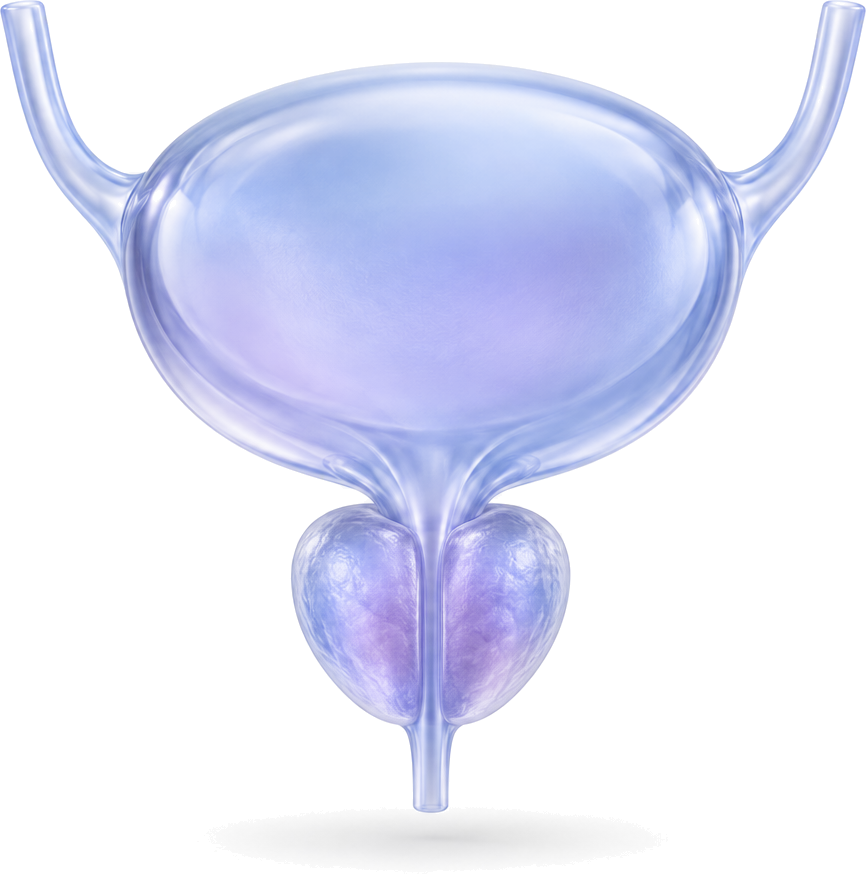
The urethra is the tube that carries urine out of the bladder. A urethral stricture is a narrowing of this tube caused by scar tissue (fibrosis) developing in part of it. Urine passes through the narrowed section with difficulty; the stream becomes thin and weak, and the bladder does not empty completely.
In men, the urethra is about 18–20 cm long, and a stricture can develop anywhere along it. The section most often affected is the bulbar urethra, between the base of the penis and the anus. Urethral strictures are rare in women. The location, length and cause of the stricture are the most important factors that directly determine the choice of treatment.
Causes of urethral stricture
In some patients no clear cause is found (idiopathic stricture). The main known causes are:
- Trauma: A straddle injury (falling astride a bicycle, railing, etc.) can injure the bulbar urethra, while pelvic fractures in serious road traffic accidents can injure the posterior urethra close to the bladder.
- Catheters and endoscopic urological procedures: A stricture can develop after long-term catheter use, a difficult catheterisation or procedures performed through the urethra, such as endoscopic prostate surgery and cystoscopy.
- Infections: In particular, sexually transmitted urethritis that was not adequately treated in the past (for example gonorrhoea) can lead to a stricture.
- Lichen sclerosus: A chronic inflammatory skin condition affecting the head of the penis and the foreskin. It can cause long strictures at the urinary opening (meatus) and in the penile urethra.
- Congenital causes and previous surgery: Strictures can also occur after childhood operations such as hypospadias repair.
Symptoms
Because a stricture develops slowly, symptoms often begin insidiously and the person may gradually get used to the weakening stream. Common symptoms include:
- A weak, thin or split (spraying) urine stream
- Difficulty starting to pass urine and the need to strain
- Passing urine takes longer; a feeling that the bladder has not emptied completely
- Dribbling after finishing
- Frequent urination and getting up at night to pass urine
- Recurrent urinary tract infections, sometimes blood in the urine
Because some of these symptoms can also be caused by prostate enlargement, a weak stream should always be assessed for urethral stricture as well, particularly in young men. Being completely unable to pass urine (acute urinary retention) is an emergency; in these patients, no attempt should be made to force a catheter through the stricture, and if necessary a temporary catheter should be placed into the bladder through the lower abdomen (suprapubic cystostomy).
Urethral stricture or prostate enlargement?
A weak urine stream, frequent urination and a feeling that the bladder has not emptied completely can occur both with urethral stricture and with prostate enlargement. For this reason, the two conditions are sometimes confused. A few clues help to tell them apart:
- Age: Prostate enlargement usually becomes noticeable after the age of 50. If a younger man has a weak stream, urethral stricture should always be considered.
- History: A history of trauma, catheterisation, endoscopic prostate surgery or a sexually transmitted infection increases the likelihood of a stricture.
- Response to medication: No clear relief with the medicines used for prostate enlargement strengthens the suspicion of a stricture.
- Flow curve: A long, flat curve on uroflowmetry is more consistent with a stricture.
The distinction becomes clear with urethrography and cystoscopy. Both conditions can also be present in the same patient; knowing about an accompanying stricture in advance changes the treatment plan, particularly in patients scheduled for prostate surgery. For detailed information on prostate enlargement, see the enlarged prostate treatment page.
How is it diagnosed?
At the consultation, the doctor asks how long the symptoms have been present and about any history of trauma, catheters and operations. The following tests are used for diagnosis and treatment planning:
- Uroflowmetry (urine flow test): The patient passes urine into a special device; the flow rate and the shape of the flow curve are recorded. A stricture typically shows a low, flat curve.
- Post-void residual measurement: The amount of urine left in the bladder after passing urine is measured with ultrasound.
- Retrograde urethrography: An X-ray taken with contrast medium introduced through the urinary opening. It shows the location, length and number of strictures; where needed, it is assessed together with images taken while passing urine (voiding cystourethrography).
- Cystoscopy (urethroscopy): The urethra is examined from the inside with a thin camera; the appearance and calibre of the stricture are assessed directly. See the cystoscopy page for details.
- Urine test and culture: Any accompanying infection is treated before the procedure.
Treatment options for urethral stricture
Treatment is planned individually after examination, taking into account the location, length and cause of the stricture, previous procedures and the patient’s general health.
Dilatation (widening)
The stricture is widened with fine instruments of gradually increasing thickness or with a balloon. It can be used for short, narrow strictures, in patients not suitable for surgery or for temporary relief. Because the scar tissue remains in place, there is a high likelihood that the stricture will form again.
Internal urethrotomy (DVIU)
Direct vision internal urethrotomy means opening the stricture from the inside with a cold knife (or a similar cutting instrument) using an endoscope passed through the urethra. No skin incision is made, the procedure is usually short and a catheter stays in for a few days afterwards.
It is most suitable for short strictures in the bulbar urethra occurring for the first time. In long strictures, penile urethral strictures and patients who have already had a urethrotomy, the likelihood of recurrence increases significantly. Current European Association of Urology (EAU) recommendations also advise considering urethroplasty for recurrent strictures rather than repeating the same endoscopic procedure again and again. Some patients may be advised to pass a thin catheter themselves for a certain period after urethrotomy (intermittent self-calibration).
Urethroplasty (surgical reconstruction of the urethra)
For long or recurrent strictures and those that have not responded to endoscopic treatment, urethroplasty is performed to achieve a lasting repair. The operation is usually performed through an incision in the area between the base of the penis and the anus.
- Anastomotic urethroplasty: In short strictures, the narrowed section is removed completely and the two healthy ends of the urethra are stitched together without tension.
- Buccal mucosa graft urethroplasty: In longer strictures, a thin piece of tissue taken from the inner surface of the cheek (buccal mucosa) is used as a patch to widen the urethra. Because this tissue is adapted to a wet environment, it is frequently chosen for urethral reconstruction.
- Staged repair: In long penile strictures caused by lichen sclerosus or in complex cases that have already had several operations, the reconstruction may be performed in two stages.
For short strictures at the urinary opening (meatal stenosis), a smaller procedure (meatotomy or meatoplasty) may provide a solution.
The procedure and recovery
After internal urethrotomy, patients are usually discharged within a short time and the catheter is removed after a few days. After urethroplasty, the hospital stay is usually a few days; the catheter is usually left in place for a few weeks to allow the repair to heal, and an X-ray with contrast medium may be taken before removal if needed. During this period, heavy lifting, cycling and sexual intercourse should be avoided for a while. In patients who have had a buccal graft taken, the inside of the mouth heals within a few weeks.
Risks and possible complications
As with any procedure, there are risks of bleeding, infection and anaesthesia. In addition:
- Recurrence of the stricture (more likely with endoscopic methods)
- Dribbling after passing urine
- After urethroplasty, temporary numbness in the surgical area and, rarely, penile curvature or changes in erections
- Temporary pain, numbness or tightness where the buccal graft was taken
These risks and the option suitable for your individual situation are discussed in detail during the consultation.
Follow-up after treatment
After treatment, the doctor asks about symptoms, and the urine flow rate (uroflowmetry) and the amount of urine left in the bladder are measured at set intervals. Cystoscopy or urethrography is repeated in patients for whom it is considered necessary. Because some strictures can develop again months or years later, it is important to come for a check-up without delay if you notice the stream weakening again.
Urethral stricture treatment in Bursa, Turkey
Op. Dr. Mücahit Kabar graduated from Uludağ University Faculty of Medicine and completed his urology residency at the Urology Clinic of Ankara Training and Research Hospital. In Bursa (Nilüfer), he sees patients with a weak urine stream and urethral stricture at Özel Medicabil Nilüfer Hastanesi (weekdays 08:30–12:00) and Özel Jimer Hastanesi (weekdays 13:00–17:00), and plans endoscopic urethrotomy or urethroplasty together with the patient on the basis of the examination and test results.
Consultations are held in English or Turkish. The hospitals’ international patient departments can arrange interpreters for other languages and help with airport transfers and accommodation. If you are travelling from abroad, you can book the examination in advance through the online booking page or appointment line of Özel Medicabil Nilüfer Hastanesi (weekdays 08:30–12:00, +90 444 8 112) or Özel Jimer Hastanesi (weekdays 13:00–17:00, +90 444 45 67). You can share any previous urethrography or cystoscopy reports via WhatsApp (+90 541 622 54 82) beforehand. More information is available on the international patients page and the contact page.