What is percutaneous nephrolithotomy (PCNL)?
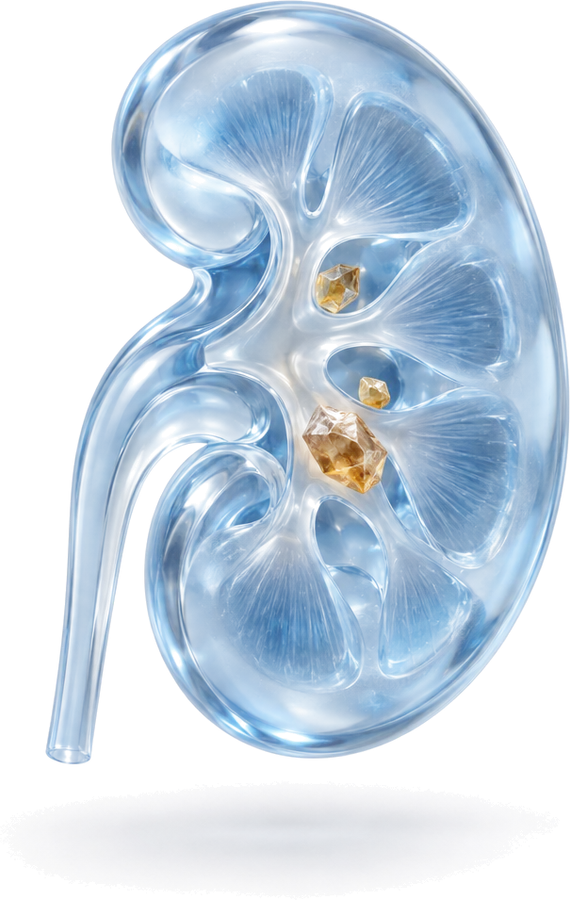
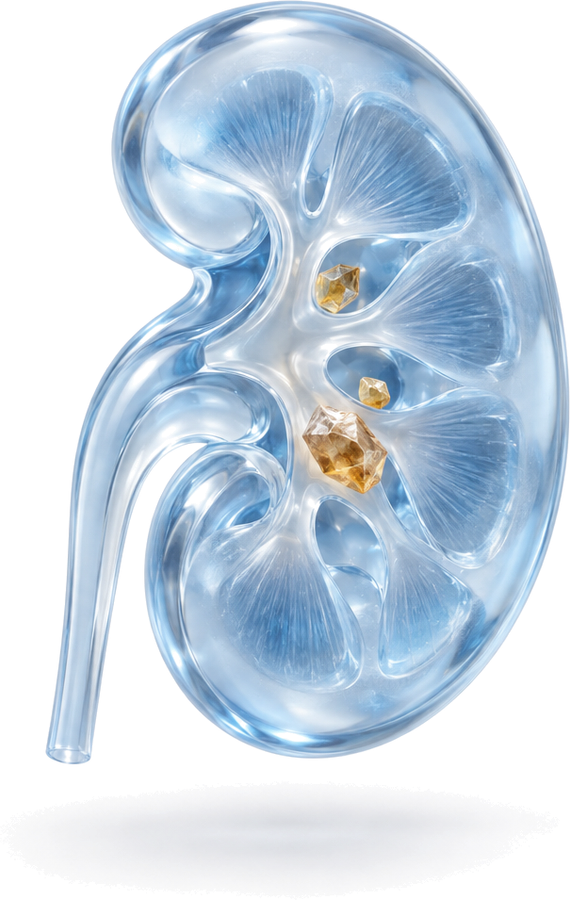
Percutaneous nephrolithotomy, or PCNL for short (also written PNL), is a minimally invasive (endoscopic) operation used to treat large kidney stones. “Percutaneous” means through the skin, and “nephrolithotomy” means removing a stone from the kidney. An endoscope (nephroscope) is placed inside the kidney through a channel of about 1 cm made in the flank; the stone is broken up under direct vision and the fragments are removed through this channel.
In the past, large kidney stones were treated with open surgery; today, the great majority of these stones are treated with PCNL. The method is recommended in the guidelines because it can achieve high stone clearance in a single session for large stones.
When is PCNL used?
The choice of treatment depends on the size, location and hardness of the stone, the anatomy of the kidney and the patient’s general health. PCNL is often preferred in the following situations:
- Kidney stones larger than 2 cm
- Staghorn stones that branch out and fill the inside of the kidney
- Stones that could not be cleared with ESWL or RIRS
- Large stones in the lower part of the kidney, whose fragments are not expected to pass after ESWL
- Selected stones formed behind a narrowing or in a pouch inside the kidney (calyceal diverticulum)
In kidneys located in an unusual position (for example, an ectopic kidney in the pelvis), PCNL can also be performed with laparoscopic assistance in suitable patients. Because the bowel may lie in front of such kidneys, the aim is to create the access route safely under laparoscopic vision. Every difference in kidney anatomy is assessed separately, and the treatment plan is made accordingly.
Who may not be suitable for PCNL?
An untreated urinary tract infection, an uncorrected bleeding disorder, blood thinners that cannot be stopped and pregnancy are obstacles to PCNL. Any infection is treated first; blood thinners are stopped temporarily in a plan agreed with the doctor who prescribed them. In these situations, other methods such as RIRS may also be considered.
Preparing for surgery
- Non-contrast CT scan: Assesses the size and position of the stone and the relationship of the kidney to the surrounding organs; the access route is planned on the basis of this scan.
- Urine test and urine culture: Any infection is treated before surgery.
- Blood tests: Blood count, clotting values and kidney function are checked.
- Anaesthetic assessment and a review of the medications you take.
How is PCNL performed?
- Under general anaesthesia, a thin catheter is first placed through the urinary tract into the kidney being treated.
- The patient is positioned face down or on their back, depending on the surgical plan.
- The kidney is entered from the flank with a fine needle under fluoroscopy (X-ray) and/or ultrasound guidance.
- This access route is gradually widened until the nephroscope can pass through.
- The stone is broken up using laser, ultrasonic or pneumatic energy, and the fragments are removed.
- The kidney is checked, and the operation is completed with a nephrostomy tube, a double-J stent or tubeless, as needed.
What is mini-PCNL?
Mini-PCNL is PCNL performed with thinner instruments and a narrower access channel. It may be preferred in suitable patients, particularly for medium-sized stones. Because the procedure can take longer for large stones as the channel gets narrower, the method is chosen according to the characteristics of the stone.
Nephrostomy and tubeless PCNL
Traditionally, a thin nephrostomy tube is left at the end of the operation to drain urine from the kidney out through the flank. In suitable patients with little bleeding, complete stone clearance and no need for further access, the operation can be completed without a tube (tubeless) or with only a double-J stent. This decision is made during surgery.
Recovery
- The hospital stay is generally 1–3 days.
- If there is a nephrostomy tube, it is usually removed before discharge; the small opening where the tube was closes quickly.
- Mild blood in the urine and tenderness in the flank may occur in the first days.
- People usually return to desk work within 1–2 weeks; the return to heavy lifting and strenuous sport is planned later.
- If a double-J stent was placed, its removal date is set at discharge.
- Whether any stone remains is assessed with a follow-up scan.
What to watch for after going home
- Drink plenty of fluids spread over the day; aim for pale-coloured urine.
- Change the dressing where the tube was as advised; keep the area clean and dry.
- Avoid heavy lifting, straining and strenuous exercise in the first weeks.
- Always ask your doctor when to restart blood thinners.
- Do not miss your stent removal and follow-up appointments.
Advantages and limitations of PCNL
The most important advantage of PCNL is that it can achieve high stone clearance in a single session for large and branched stones. Because the stone fragments are removed, there is no need to wait for broken fragments to pass in the urine. Compared with open surgery, the incision is very small, and it is less demanding in terms of pain, bleeding and recovery time.
However, PCNL is a more extensive procedure than incision-free methods. It requires general anaesthesia, the hospital stay is slightly longer than with RIRS, and the risk of bleeding is more significant. It is generally not the first option for small stones, for which ESWL or RIRS is often sufficient. The method is chosen after discussing these advantages and limitations with the patient.
Possible risks
PCNL is an effective, well-established method for large stones, but it is a more extensive procedure than incision-free methods. Possible risks include:
- Bleeding: The most important risk. It usually stops on its own; rarely, a blood transfusion or an additional procedure may be needed.
- Fever and infection: Can occur particularly with infection stones; treated with antibiotics.
- Urine leakage: Urine may temporarily leak from the tube site.
- Injury to nearby organs: Injury to surrounding organs such as the bowel, the lining of the lung or the spleen is rare; CT-based planning aims to reduce these risks.
- Remaining stone: With large, branched stones, a second procedure (PCNL, RIRS or ESWL) may be needed.
After discharge, seek medical care without delay if you have high fever, increasing flank pain, or heavy bleeding with clots in the urine.
Follow-up and prevention after treatment
Patients who form large stones may have a higher risk of recurrence. Having the removed stone analysed, a metabolic evaluation with blood tests and a 24-hour urine collection where needed, and drinking enough fluid are all important. As some staghorn stones are linked to infection, monitoring urinary tract infections is also part of treatment. For prevention advice, see the kidney stone treatment page; for the incision-free alternative, see the RIRS page.
PCNL in Bursa, Turkey
Op. Dr. Mücahit Kabar graduated from Uludağ University Faculty of Medicine and completed his urology residency at the Urology Clinic of Ankara Training and Research Hospital. He has scientific studies published in international journals on laparoscopy-assisted percutaneous nephrolithotomy in ectopic pelvic kidneys and on a rare complication that can occur during PCNL. He sees patients with large kidney stones in Bursa (Nilüfer) at Özel Medicabil Nilüfer Hastanesi (weekdays 08:30–12:00) and Özel Jimer Hastanesi (weekdays 13:00–17:00).
Consultations are held in English or Turkish. The hospitals’ international patient departments can arrange interpreters for other languages and help with airport transfers and accommodation. If you are travelling from abroad, you can book your appointment in advance through the online booking page or appointment line of Özel Medicabil Nilüfer Hastanesi (weekdays 08:30–12:00, +90 444 8 112) or Özel Jimer Hastanesi (weekdays 13:00–17:00, +90 444 45 67). You can share your CT reports beforehand via WhatsApp (+90 541 622 54 82). More information is available on the international patients page and the contact page.