What is an enlarged prostate (BPH)?
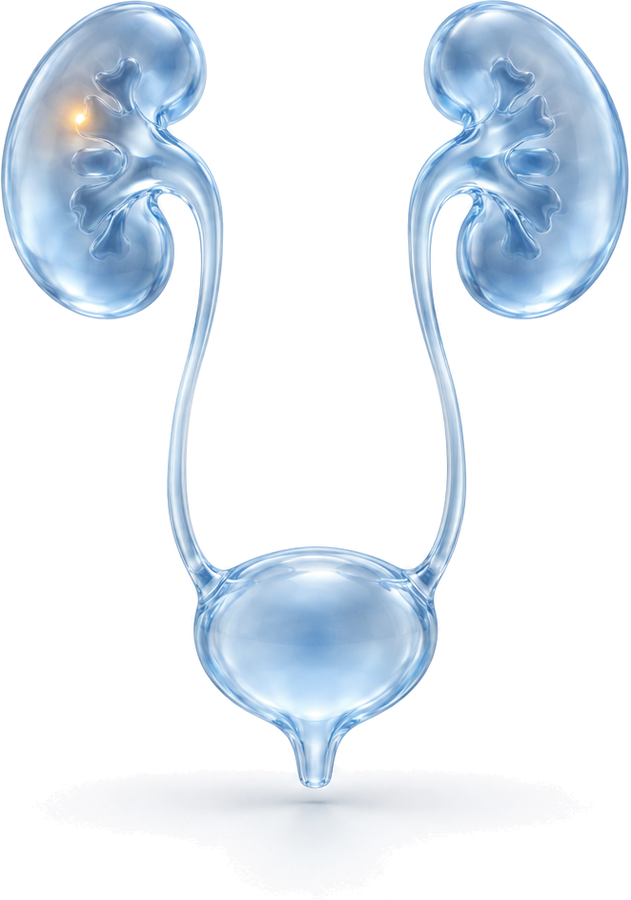
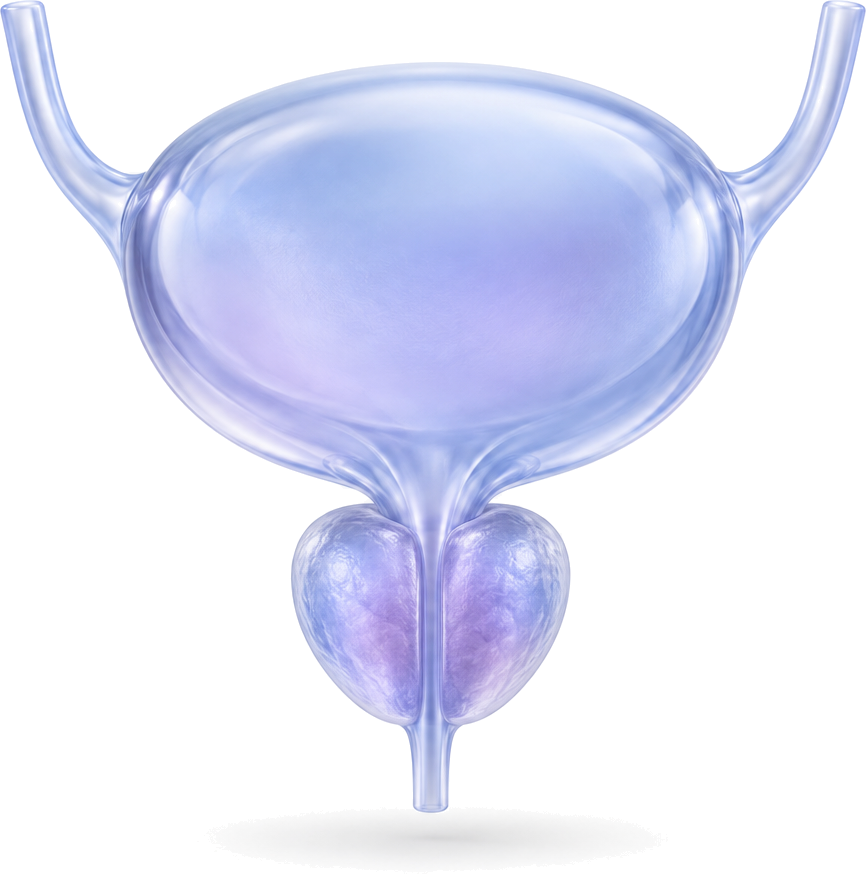
The prostate is a walnut-sized gland that sits just below the bladder and surrounds the first part of the urethra (the tube that carries urine out of the body). In men, prostate tissue slowly grows with age. This benign growth is called benign prostatic hyperplasia (BPH). BPH is not cancer and does not turn into cancer.
An enlarged prostate can press on the urethra, making it harder to pass urine and affecting how the bladder works. However, the size of the prostate does not always match the severity of the symptoms: a patient with a large prostate may have few symptoms, while a patient with a prostate that is not very large may have marked complaints. This is why the treatment decision is based not only on prostate size but on the symptoms and examination findings.
Symptoms of an enlarged prostate
Symptoms caused by an enlarged prostate are called lower urinary tract symptoms (LUTS) and fall into three groups:
- Storage symptoms: Frequent urination, waking at night to pass urine (nocturia), a sudden urge to urinate that cannot be postponed (urgency)
- Voiding symptoms: Difficulty starting to urinate, a weak or interrupted stream, straining to pass urine
- Post-micturition symptoms: A feeling that the bladder has not emptied completely, dribbling after urination
When to seek urgent care: If you cannot pass urine at all (acute urinary retention), have marked blood in the urine, urinary symptoms with fever, or severe pain when passing urine, seek medical care without delay.
How is it diagnosed?
During the consultation, the doctor asks when the symptoms started, which medications you take, your drinking habits and any other medical conditions. This is followed by:
- IPSS (International Prostate Symptom Score): A short questionnaire that measures the severity of symptoms. Based on the total score, symptoms are classified as mild (0–7), moderate (8–19) or severe (20–35).
- Digital rectal examination: Gives information about the size and consistency of the prostate and helps detect hardness or irregularities that may raise suspicion of cancer.
- Urine test: Checks for infection and blood.
- PSA (prostate-specific antigen): Used to assess the likelihood of prostate cancer and to give an idea of prostate volume. PSA is interpreted according to age, prostate volume and the medications you take.
- Ultrasound: Shows the prostate volume, the kidneys and the amount of urine left in the bladder after urination.
- Uroflowmetry: The urine flow rate is measured by passing urine into a special toilet.
- Bladder diary: Especially for night-time urination, fluid intake and urine volumes are recorded over a few days.
Treatment options for an enlarged prostate
Treatment is planned individually, taking into account the severity of the symptoms, the size of the prostate, other medical conditions and the patient’s expectations.
Monitoring and lifestyle advice
For patients with mild symptoms whose daily life is not significantly affected, monitoring without medication may be appropriate. Drinking less in the evening, limiting caffeine and alcohol, preventing constipation and not putting off urination for long periods can ease the symptoms. Regular check-ups are important.
Medication
- Alpha-blockers: Relax the muscles of the prostate and bladder outlet, making it easier to pass urine. They usually start working quickly. Dizziness, low blood pressure and a reduced volume of semen may occur.
- 5-alpha reductase inhibitors (finasteride, dutasteride): Reduce prostate volume and, in the long term, can reduce the risk of urinary retention and the need for surgery. They are preferred particularly for large prostates; their effect develops over months. Side effects such as reduced sex drive and erectile problems may occur. Because they lower PSA by about half, this is taken into account when monitoring PSA.
- Combination therapy: In patients with a large prostate and moderate to severe symptoms, both groups of medication can be used together.
- If urgency and frequent urination are the main problem, medication that calms the bladder may be added; if there is also erectile dysfunction, certain phosphodiesterase-5 inhibitors may be added.
Surgical treatment
Surgery is considered for patients whose symptoms persist despite medication, or who develop recurrent urinary retention, recurrent infections, bladder stones, recurrent bleeding or a decline in kidney function. Today, most prostate operations are performed through the urethra, without any incision in the skin.
- TURP (transurethral resection of the prostate): Using an endoscope passed through the urethra, the prostate tissue narrowing the urinary channel is removed in small pieces with electrical energy. It has been the standard method for medium-sized prostates for many years.
- Bipolar TURP (plasmakinetic): A form of TURP performed with bipolar energy. Because saline can be used during the operation, it reduces the risk of problems caused by fluid absorption in longer procedures.
- Bipolar enucleation (BipoLEP): The enlarged prostate tissue is separated from its capsule, pushed into the bladder in one piece, then broken up and removed. It can also be used for large prostates.
- HoLEP (holmium laser enucleation of the prostate): The same enucleation principle, performed with holmium laser energy. It is an option regardless of prostate size, particularly for large prostates.
The right method is chosen according to prostate volume, the patient’s general health, the use of blood thinners and expectations. The removed tissue is always sent for pathological examination.
After surgery and possible side effects
After the operation, a urinary catheter is placed in the urethra and is usually removed within 1–3 days. In the first weeks, mild blood in the urine, burning and frequent urination may occur; these usually ease over time. During this period, avoiding heavy lifting, strenuous exercise and straining is recommended.
An important point patients should know about is retrograde ejaculation: after TURP, bipolar methods and HoLEP, in most patients semen passes into the bladder instead of out of the body during ejaculation. This is not harmful to health, and the sensation of orgasm is usually preserved; however, it can affect the ability to father children naturally. Patients who plan to have children should always discuss this before surgery.
Other possible problems include temporary urinary incontinence, bleeding, urinary tract infection and, later on, narrowing of the urethra or bladder neck. Permanent incontinence is rare. For incontinence problems, see the urinary incontinence page.
Follow-up and prevention
An enlarged prostate is a progressive condition; regular check-ups are important for patients on medication and those who have had surgery. Weight control, regular physical activity and keeping blood sugar and blood pressure under control are beneficial for urinary symptoms as well as for general health. An enlarged prostate and prostate cancer are different diseases, but because they occur in the same age group, PSA and examination results need to be assessed together. For more information, see the prostate cancer page.
Enlarged prostate treatment in Bursa, Turkey
Op. Dr. Mücahit Kabar graduated from Uludağ University Faculty of Medicine and completed his urology residency at the Urology Clinic of Ankara Training and Research Hospital. He has a scientific study, published in an international peer-reviewed journal, examining the relationship between metabolic syndrome and lower urinary tract symptoms in patients with benign prostatic hyperplasia. He sees patients with an enlarged prostate and urinary symptoms in Bursa (Nilüfer) at Özel Medicabil Nilüfer Hastanesi (weekdays 08:30–12:00) and Özel Jimer Hastanesi (weekdays 13:00–17:00).
Consultations are held in English or Turkish. The hospitals’ international patient departments can arrange interpreters for other languages and help with airport transfers and accommodation. If you are travelling from abroad, you can book your appointment in advance through the online booking page or appointment line of Özel Medicabil Nilüfer Hastanesi (weekdays 08:30–12:00, +90 444 8 112) or Özel Jimer Hastanesi (weekdays 13:00–17:00, +90 444 45 67). You can share your PSA results and ultrasound reports beforehand via WhatsApp (+90 541 622 54 82). More information is available on the international patients page and the contact page.