What is cystoscopy?
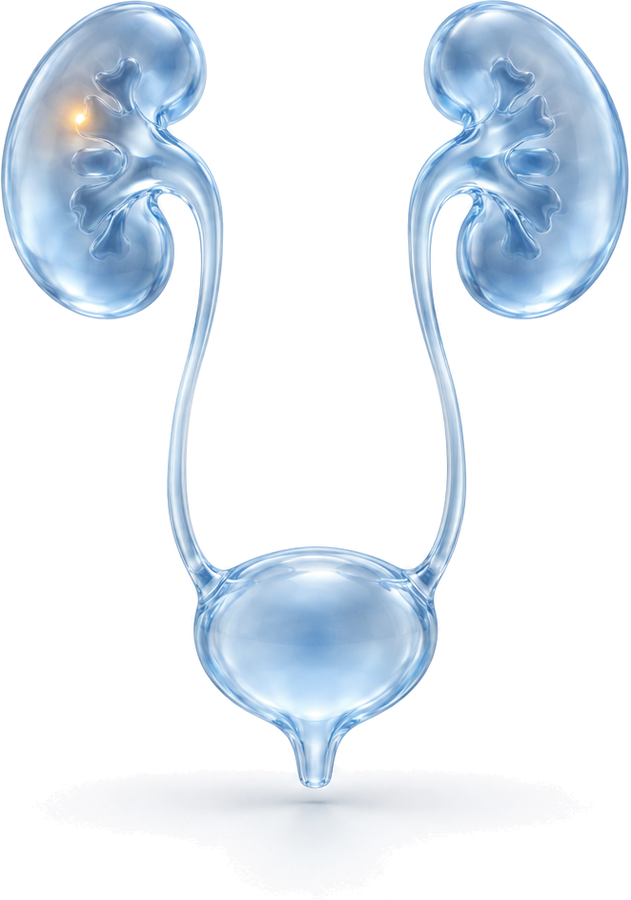
Cystoscopy is the direct examination of the inside of the urethra and the bladder with a thin camera system (cystoscope) passed through the urinary opening. No skin incision is made. The camera image is shown on a screen, and the doctor assesses the bladder wall, the urethra, the part of the prostate facing the urethra and the openings where the ureters from the kidneys enter the bladder (ureteral orifices).
Cystoscopy can be performed for both diagnosis and treatment. In a diagnostic procedure, the aim is to see and, if necessary, take a small tissue sample. In therapeutic procedures, a bladder stone can be broken up, small tumours removed or a previously placed double-J stent taken out by the same route.
Who needs cystoscopy?
Cystoscopy is most often recommended in the following situations:
- Blood in the urine (haematuria): Especially when blood is visible in the urine, it is one of the key tests for ruling out a bladder tumour. When blood is found only on a urine test, the decision depends on age, smoking history and other risk factors.
- Bladder tumour follow-up: Performed at regular intervals to check whether a treated bladder tumour has recurred. For details, see the bladder cancer page.
- Recurrent urinary tract infections: In selected patients in whom an underlying structural cause (stone, stricture, diverticulum) is suspected.
- Suspected urethral stricture: To assess the cause of a weak urine stream and the appearance of the stricture. See urethral stricture.
- Bladder stones: To see the stone and break it up in the same session.
- Urinary symptoms: To assess the anatomy in selected patients with frequent urination, incontinence or before prostate surgery.
- Double-J stent removal: Stents placed after stone or kidney surgery are usually removed by cystoscopy.
What can be seen during cystoscopy?
Cystoscopy can directly show many conditions that cannot be detected with imaging methods:
- Bladder tumours and suspicious red areas
- Bladder stones and foreign bodies
- Urethral strictures
- Enlargement of the prostate narrowing the urethra
- Thickening of the bladder wall, pouches (diverticula) and changes due to long-standing obstruction
- Changes due to chronic inflammation
- The position and appearance of the ureteral orifices; sometimes bloody urine coming from one side
A normal cystoscopy is also important information; further tests are then directed towards the cause of the symptoms.
Cystoscopy in women and men
In women, the urethra is short and straight, so the procedure is usually quicker and better tolerated. In men, the urethra is longer and passes through the prostate; for this reason, flexible devices offer a more comfortable option for diagnostic procedures. In men, a brief feeling of pressure may be felt as the instrument passes through the prostate; breathing deeply and slowly helps the muscles to relax.
Rigid and flexible cystoscopy
Flexible cystoscopy
Performed with a thin, bendable device. It is mostly diagnostic and is carried out as an outpatient procedure with a local anaesthetic (numbing) gel introduced into the urethra. Because the device can bend, the entire bladder wall can be seen easily. It is often chosen for bladder tumour follow-up, investigation of blood in the urine and stent removal.
Rigid cystoscopy
Performed with a straight, rigid device. Thanks to its wider working channel, it allows procedures such as biopsy, stone fragmentation and tumour removal. In men, it is usually performed under spinal or general anaesthesia. In women, because the urethra is short, some diagnostic rigid procedures can also be performed under local anaesthetic.
Which method is used is decided after examination, according to the purpose of the procedure and the patient’s condition.
Preparation before the procedure
- A urine test is usually performed beforehand; if there is an active urinary tract infection, the procedure is usually postponed until the infection has been treated.
- If you take blood thinners, always tell your doctor; if a biopsy is planned, the medication may need to be adjusted. Do not stop these medications on your own.
- Fasting is usually not necessary for procedures under local anaesthetic. For procedures under anaesthesia, the fasting time is given in advance.
- The need for antibiotics is decided by the doctor according to the individual’s risk; most patients do not need routine antibiotics for a simple diagnostic cystoscopy.
How is the procedure performed?
- The patient lies on their back on the examination table with legs apart.
- The genital area is cleaned with an antiseptic solution and sterile drapes are applied.
- For flexible cystoscopy, a numbing lubricant gel is introduced into the urethra and a few minutes are allowed for it to work.
- The cystoscope is gently advanced through the urinary opening. The bladder is filled with sterile fluid so that it can be seen clearly; you may feel the urge to pass urine during this time.
- The urethra and bladder wall are examined systematically.
- If necessary, a small tissue sample (biopsy) is taken.
- At the end of the procedure, the fluid in the bladder is drained or the patient goes to the toilet to pass urine.
Diagnostic flexible cystoscopy usually takes 5–15 minutes. The findings are shared with the patient at the end of the procedure.
Biopsy during cystoscopy
When a suspicious area is seen on the bladder wall, a small tissue sample can be taken with fine forceps. Small biopsies can sometimes be taken under local anaesthetic. When an obvious tumour is seen, transurethral resection of the bladder tumour (TURBT) under anaesthesia is usually planned so that the tumour can be removed completely and staged correctly. The tissue samples are sent for pathology, and the result is usually available within a few days to one or two weeks.
After the procedure
The following symptoms are common for a few days after cystoscopy and usually settle by themselves:
- Burning when passing urine
- A slight pink colour or small amount of blood in the urine
- Frequent urination and a feeling of urgency
Drinking plenty of fluids spread over the day during this period helps symptoms to settle quickly. After procedures under local anaesthetic, most patients can return to their daily activities on the same day. Patients who have had sedation or general anaesthesia are advised not to drive that day.
When should you see a doctor?
Contact your doctor without delay in the following situations:
- Fever and chills
- Inability to pass urine or a marked decrease in urine output
- Bleeding with clots, dark bleeding or bleeding that keeps increasing
- Burning and pain lasting more than a few days or getting worse
- Flank pain
Risks
Cystoscopy is generally a safe procedure. Possible risks include urinary tract infection, temporary bleeding and burning and, rarely, injury to the urethra and the development of a stricture in the long term. The likelihood of bleeding is slightly higher in patients who have had a biopsy. These risks are discussed with the patient before the procedure.
Follow-up
Follow-up after cystoscopy is planned according to the reason for the procedure. In patients monitored for a bladder tumour, the frequency of check cystoscopies is determined by the tumour’s risk group. Even if a cystoscopy performed for blood in the urine is normal, separate imaging of the kidneys and ureters may be needed.
If a stricture, stone or prostate enlargement is found during cystoscopy, treatment options are discussed in detail at the follow-up appointment. For patients who have had a biopsy, it is recommended that the result is discussed face to face once the pathology report is available; at this appointment, any additional tests and the treatment plan are agreed together. For patients who smoke, stopping smoking is also important for bladder health.
Cystoscopy in Bursa, Turkey
Op. Dr. Mücahit Kabar graduated from Uludağ University Faculty of Medicine and completed his urology residency at the Urology Clinic of Ankara Training and Research Hospital. He has published scientific studies in uro-oncology, including a case report on urothelial cancer of the bladder. In Bursa (Nilüfer), he assesses patients who need cystoscopy for blood in the urine, bladder tumour follow-up and other reasons at Özel Medicabil Nilüfer Hastanesi (weekdays 08:30–12:00) and Özel Jimer Hastanesi (weekdays 13:00–17:00).
Consultations are held in English or Turkish. The hospitals’ international patient departments can arrange interpreters for other languages and help with airport transfers and accommodation. If you are travelling from abroad, you can book the procedure in advance through the online booking page or appointment line of Özel Medicabil Nilüfer Hastanesi (weekdays 08:30–12:00, +90 444 8 112) or Özel Jimer Hastanesi (weekdays 13:00–17:00, +90 444 45 67). You can share your test and imaging results in advance via WhatsApp (+90 541 622 54 82). More information is available on the international patients page and the contact page.