What are the adrenal glands?
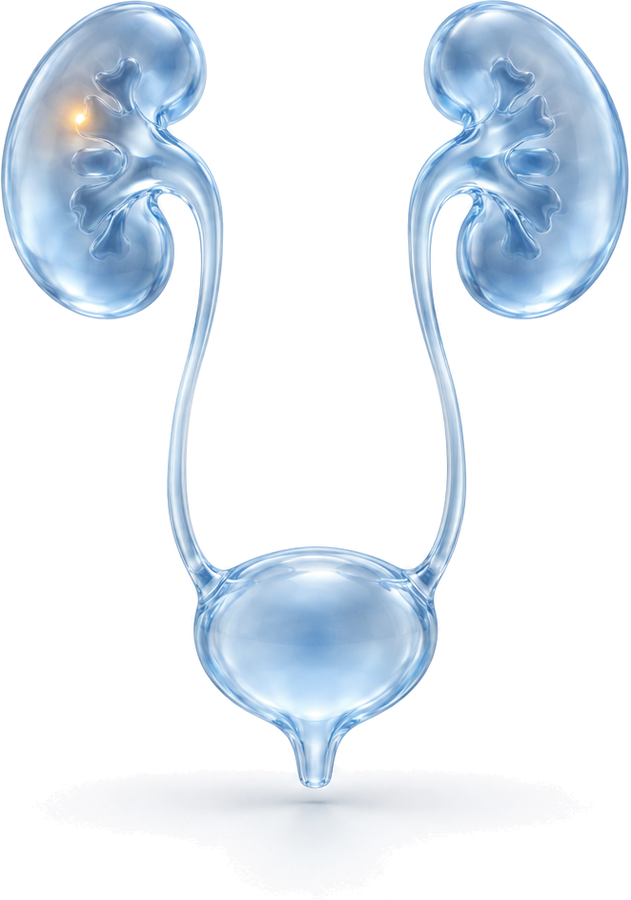
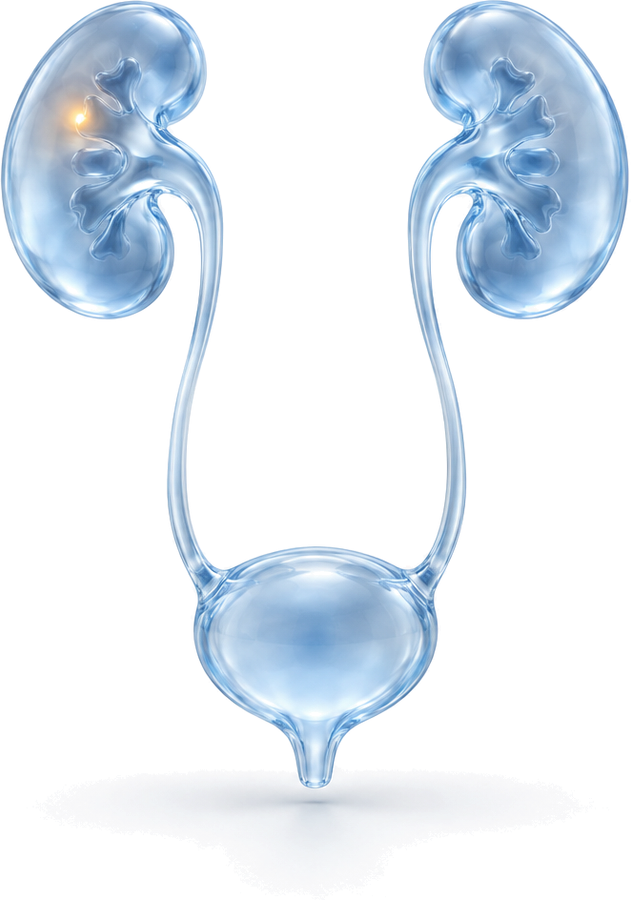
The adrenal glands are small, triangular hormone glands located on top of each kidney. Despite their small size, they produce hormones that are vital for the body:
- Cortisol: stress response, sugar and fat metabolism, immune system
- Aldosterone: salt and water balance, potassium levels and blood pressure
- Adrenaline and noradrenaline: heart rate and blood pressure
- Small amounts of sex hormones
Masses that develop in the adrenal gland may overproduce these hormones (hormonally active tumours) or produce no hormones at all (hormonally inactive tumours). The vast majority of masses are benign.
Adrenal incidentaloma: a mass found by chance
Today, most adrenal masses are noticed by chance on a CT scan or ultrasound performed for abdominal pain, kidney stones or another reason. These masses are called adrenal incidentalomas. They become more common with age.
When an adrenal mass is found by chance, two key questions need answering:
- Does the mass produce hormones?
- Is there a possibility that the mass is malignant?
The answers to these two questions determine whether the mass needs surgery or follow-up.
Hormone-producing adrenal tumours and their symptoms
Cushing’s syndrome (excess cortisol)
Weight gain (especially around the abdomen and face), purple stretch marks on the abdomen, muscle weakness, high blood pressure, diabetes and osteoporosis may occur. Mild excess cortisol without symptoms is also common in incidentally found masses.
Primary aldosteronism (Conn’s syndrome)
Excess aldosterone causes high blood pressure that is resistant to treatment and low potassium levels in the blood. Muscle cramps, weakness and frequent urination may occur. This condition should always be investigated in high blood pressure that starts at a young age or cannot be controlled despite several medications.
Phaeochromocytoma
This is a tumour that produces adrenaline and noradrenaline. Typical symptoms are episodes of headache, sweating, palpitations and raised blood pressure; some patients have no symptoms. It requires special medication before surgery.
Adrenal cancer and other masses
Cancer arising from the adrenal gland (adrenocortical carcinoma) is rare; it is usually found as a large mass. Cancers of other organs can also spread to the adrenal gland. Apart from these, benign masses such as cysts and myelolipomas can also occur.
How is it diagnosed?
Adrenal masses are assessed through collaboration between urology and endocrinology.
Hormone tests
- 1 mg dexamethasone suppression test: Performed in every patient to look for excess cortisol.
- Plasma or urine metanephrines: Performed to rule out phaeochromocytoma. This may not be needed in some patients whose non-contrast CT shows a typical benign adenoma.
- Aldosterone and renin levels: Requested in patients with high blood pressure or low potassium. In primary aldosteronism, adrenal vein sampling may be performed if needed to find out whether the disease is one-sided.
Imaging
- Non-contrast CT: The density of the mass is measured. Masses with a high fat content, low density and smooth borders are very likely to be benign adenomas.
- Contrast-enhanced CT or MRI: Provides additional information for masses where a firm conclusion cannot be reached on non-contrast CT.
When is surgery needed?
The decision to operate is not based on a single criterion but on an overall assessment of all findings. In general, surgery is recommended in the following situations:
- Hormone-producing masses (phaeochromocytoma, one-sided primary aldosteronism, cortisol-producing adenomas)
- Masses usually larger than 4 cm whose imaging features are not entirely consistent with a benign adenoma
- Masses that grow significantly during follow-up
- Masses with features suspicious for malignancy on imaging
Small masses that do not produce hormones and have a typical benign appearance usually do not need surgery. The decision is made individually for each patient after examination and tests.
Laparoscopic adrenalectomy
The standard method for benign and medium-sized adrenal tumours is laparoscopic (keyhole) adrenalectomy. Under general anaesthesia, a camera and fine surgical instruments are inserted through several small openings in the abdomen or flank, and the adrenal gland is removed together with the tumour. Compared with open surgery, there is generally less pain, a shorter hospital stay and a faster return to daily life. For general information on laparoscopic surgery, see the laparoscopic urologic surgery page.
Open surgery may be preferred for very large masses, when spread to surrounding tissues is suspected or when the likelihood of adrenal cancer is high.
Preparation before phaeochromocytoma surgery
During phaeochromocytoma surgery, handling the tumour can cause a sudden rise in blood pressure. For this reason, medication from the alpha-blocker group, which relaxes the blood vessels, is usually started 1–2 weeks before surgery; if necessary, medication to regulate heart rate is added and plenty of fluid and salt is recommended. The preparation is carried out together with the endocrinology and anaesthesia teams.
Recovery
The hospital stay after laparoscopic adrenalectomy is usually a few days. Most patients can return to their daily activities within 1–2 weeks; heavy lifting and strenuous exercise should be avoided for a few weeks. After surgery for cortisol-producing tumours, the other adrenal gland may remain suppressed for a while, so temporary cortisone replacement may be needed.
Risks
Possible risks of adrenalectomy include bleeding, infection, injury to nearby organs (spleen, liver, pancreas, major blood vessels) and, rarely, conversion to open surgery. In phaeochromocytoma, fluctuations in blood pressure and blood sugar may occur during and after surgery, so close monitoring is carried out. The possibility of hormonal insufficiency is monitored together with endocrinology.
Who should be assessed for adrenal disease?
In addition to incidentally found masses, the adrenal glands need to be investigated deliberately in certain situations:
- High blood pressure that starts at a young age or cannot be controlled despite several medications
- High blood pressure together with low potassium in the blood
- Episodes of palpitations, sweating and headache
- Unexplained weight gain, purple stretch marks on the abdomen, muscle weakness and osteoporosis
- A family history of phaeochromocytoma or certain hereditary endocrine syndromes
In these patients, the assessment is usually started by endocrinology; when a mass requiring surgery is found, the operation is planned together with urology.
What happens with masses that do not need surgery?
For small masses that do not produce hormones and have the typical appearance of a benign adenoma on CT, surgery or frequent check-ups are often not needed. For masses whose imaging features are not conclusive, a follow-up CT or MRI is performed after a certain period to see whether the mass has grown. Patients found to have mild excess cortisol are monitored for blood pressure, blood sugar and bone health; for some of these patients, surgery may be discussed on an individual basis.
Follow-up
Follow-up after surgery is planned according to the pathology result and the type of tumour. In hormone-producing tumours, hormone levels and blood pressure are checked after surgery. In patients who do not need surgery, follow-up imaging and hormone tests are repeated as needed, depending on the size and features of the mass.
Adrenal tumour assessment in Bursa, Turkey
Op. Dr. Mücahit Kabar graduated from Uludağ University Faculty of Medicine and completed his urology residency at the Urology Clinic of Ankara Training and Research Hospital. He has published scientific studies in uro-oncology, particularly on kidney tumours and radical nephrectomy. In Bursa (Nilüfer), he assesses patients with adrenal masses, together with endocrinology where needed, at Özel Medicabil Nilüfer Hastanesi (weekdays 08:30–12:00) and Özel Jimer Hastanesi (weekdays 13:00–17:00).
Consultations are held in English or Turkish. The hospitals’ international patient departments can arrange interpreters for other languages and help with airport transfers and accommodation. If you are travelling from abroad, you can book your consultation in advance through the online booking page or appointment line of Özel Medicabil Nilüfer Hastanesi (weekdays 08:30–12:00, +90 444 8 112) or Özel Jimer Hastanesi (weekdays 13:00–17:00, +90 444 45 67). You can share your existing CT/MRI scans and test results in advance via WhatsApp (+90 541 622 54 82). More information is available on the international patients page and the contact page.